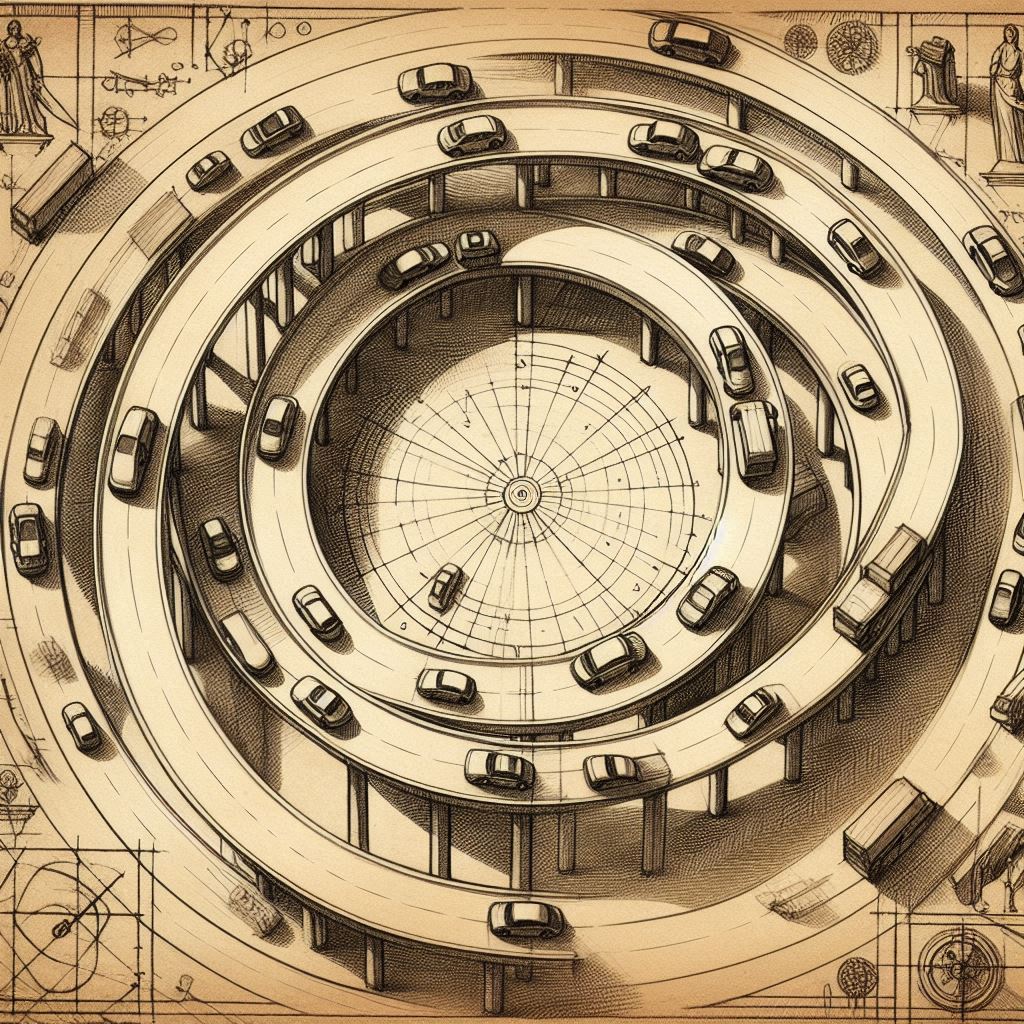
Through observation, I have identified two common anti-patterns in roundabout behavior: the “watcher,” who waits until there is no one in the roundabout before proceeding, and the “king of the hill”, who races through the roundabout as if they are the only one on the road, cutting off others from entering. In some cases, the same car will exhibit both behaviors. Frustration becomes revenge.
Contrast this with a T-shaped road or a 4-way traffic light intersection, where everyone is forced to wait their turn. A roundabout, in theory, is a win-win solution, allowing everyone to circulate until their exit appears, as long as they accommodate the entry and exit of others.
Although the benefits of co-opetition in roundabouts are clear to most people, many still ignore this logic. Upon reflection, I realized that the reason for this behavior is largely driven by incentives:
Culture - In cultures where the group is valued over the individual, this behavior is not even an issue. However, cultures that place a strong emphasis on individualism tend to drive these types of behaviors.
Law - Traffic laws often focus on assigning blame in the event of an accident, rather than encouraging collaboration. The exception takes precedence over the regular use case, placing more importance on blame than cooperation.
Once I fully understood this phenomenon, I began joking with my son, saying: “There goes another siloed organization promoter going nowhere, really fast.”
As leaders, it’s important to consider the incentives we create in our organizations and to ask ourselves: what kind of leader am I in the roundabout of life? After all, even self-driving cars are figuring out ways to collaborate and plan routes that avoid the frustration of waiting in roundabouts.